

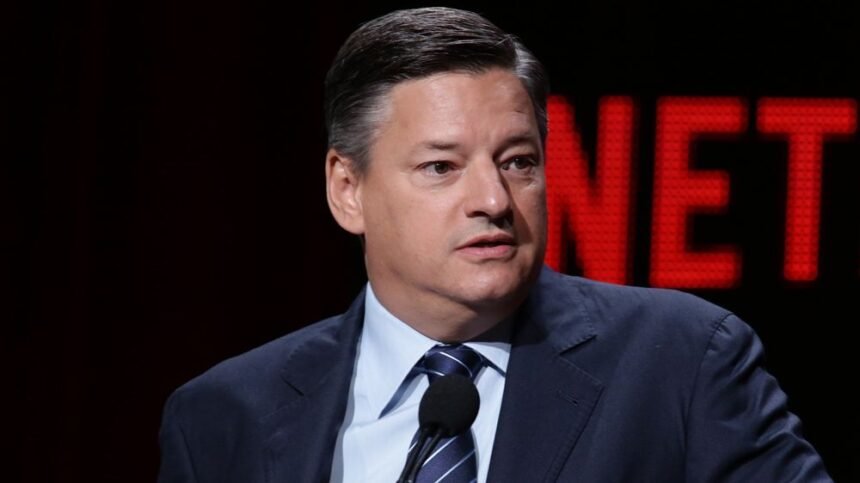
In a stunning reversal that has sent reverberations through Hollywood, Netflix, the streaming titan, has officially withdrawn its nascent bid for Warner Bros. Discovery. This strategic pivot, revealed by co-CEO Ted Sarandos, clears the path for a sweetened $111 billion deal spearheaded by David Ellison’s Skydance Media and backed by private equity giant Apollo Global Management. The move is poised to create a formidable new entertainment conglomerate, merging two of Hollywood’s most storied legacy studios and reshaping the competitive landscape for content creation and distribution. The decision by Netflix marks a significant departure from an aggressive M&A strategy, opting instead to focus on its core streaming business amidst evolving market dynamics and heightened regulatory scrutiny.
Sarandos’ candid comments pulled back the curtain on the intense negotiations and strategic considerations that unfolded over the past week, culminating in Netflix’s decision to step away. This development allows David Ellison to successfully conclude his pursuit of a merger that promises to inject new capital and strategic direction into Warner Bros. Discovery, a company grappling with significant debt and the ongoing challenges of the streaming wars. The implications of this withdrawn Netflix Warner Bros. Bid and the subsequent merger are far-reaching, affecting everything from content pipelines and talent deals to the very future of theatrical distribution and the competitive balance of power in the global entertainment industry.
The Shifting Sands of Media Consolidation: A Historical Context
The entertainment industry has been in a state of flux for over a decade, marked by a relentless wave of consolidation driven by the rise of streaming, the quest for scale, and the imperative to own intellectual property. Warner Bros. Discovery itself is a product of this trend, formed from the merger of WarnerMedia and Discovery Inc. in 2022. That deal, valued at approximately $43 billion, was intended to create a diversified media powerhouse capable of competing with giants like Disney and Netflix in the direct-to-consumer streaming arena.
However, the post-merger reality for WBD proved challenging. Laden with over $50 billion in debt, the company embarked on aggressive cost-cutting measures, including extensive layoffs and the shelving of completed projects, which drew criticism from creators and fans alike. Its streaming service, Max, struggled to differentiate itself in an increasingly crowded market, despite a rich library of iconic content. This backdrop of financial pressure and strategic uncertainty made WBD an attractive, albeit complex, target for acquisition or merger.
Netflix, on the other hand, had traditionally focused on organic growth and aggressive investment in original content, eschewing large-scale studio acquisitions. Its brief foray into considering a bid for WBD signals a momentary contemplation of a more diversified, vertically integrated model, similar to its rivals. However, the company’s ultimate decision to retreat underscores a strategic recommitment to its proven, albeit evolving, operational philosophy, prioritizing profitability and sustainable growth over massive, potentially destabilizing, mergers.
“The landscape demands agility and clear strategic focus. For Netflix, while the allure of Warner Bros.’ vast IP was undeniable, the complexity of integration and the existing financial commitments presented a challenge that ultimately did not align with our immediate growth priorities.” – A senior industry analyst, commenting on Netflix’s decision.
Analysis of the Crucial Facts and Strategic Maneuvers
Ted Sarandos’ confirmation of Netflix’s withdrawal came after a week of intense speculation and behind-the-scenes machinations. While the exact financial terms of Netflix’s internal valuation for WBD were not disclosed, industry insiders suggest it would have been a significant premium over WBD’s market capitalization, reflecting the value of its vast content library and global distribution infrastructure. Netflix’s decision to ultimately nix the bid was likely multifaceted, driven by a combination of financial prudence, regulatory concerns, and a strategic assessment of integration risks.
Key factors in Netflix’s decision likely included:
- Debt Burden: Integrating Warner Bros. Discovery’s substantial debt load of over $50 billion would have significantly altered Netflix’s financial profile, potentially impacting its ability to fund future original content and global expansion.
- Regulatory Hurdles: A merger between Netflix and WBD would have faced intense antitrust scrutiny from governmental bodies in Washington D.C. and globally. Regulators have become increasingly wary of media consolidation, and a deal of this magnitude could have triggered prolonged investigations and onerous conditions, akin to past mega-mergers that faced significant pushback. The broader political climate, which has seen figures like Donald Trump occasionally comment on large corporate mergers, also adds a layer of unpredictable regulatory risk.
- Cultural Integration: Netflix, a relatively young, tech-first company, would have faced immense challenges integrating a century-old Hollywood studio with deeply ingrained traditions and operational structures. The potential for cultural clashes and disruption to both entities’ workflows would have been a major consideration.
- Strategic Focus: Sarandos and co-CEO Greg Peters have increasingly emphasized profitability, free cash flow, and a diversified revenue stream including advertising and gaming. A massive acquisition could have diverted resources and focus from these core strategic initiatives.
With Netflix out of the picture, David Ellison’s Skydance Media, backed by Apollo Global Management, secured the deal. The sweetened $111 billion valuation reflects Ellison’s tenacious pursuit and Apollo’s robust financial backing. Skydance brings a strong track record in film and television production, with franchises like Mission: Impossible and Top Gun. Apollo, a global alternative investment manager, provides the critical capital and strategic financial expertise necessary to navigate WBD’s debt and facilitate its transformation.
This new entity, if approved, would combine Skydance’s agile, producer-friendly model with WBD’s expansive IP library, studio infrastructure in Burbank, and global distribution network. The deal aims to revitalize WBD’s creative output, stabilize its financial footing, and create a more streamlined content strategy across theatrical, streaming, and linear platforms.
Perspectives and Far-Reaching Implications for Hollywood
The outcome of the Warner Bros. Discovery saga carries profound implications for all stakeholders in the entertainment ecosystem.
For Netflix:
By sidestepping the WBD acquisition, Netflix signals a clear strategic direction focused on organic growth, innovation in its core streaming product, and expanding into adjacent revenue streams like advertising and gaming. This decision allows Netflix to maintain its relatively debt-light balance sheet compared to its competitors, providing flexibility for future content investment and technological advancements. The company avoids the complexities of integrating a vast legacy studio and the potential for internal conflicts regarding release strategies (e.g., theatrical windows versus direct-to-streaming). This move reaffirms Netflix’s position as a pure-play streaming leader, albeit one continuously adapting to a maturing market.
For the New Warner Bros. / Skydance Entity:
The merger with Skydance and Apollo’s backing promises a new chapter for Warner Bros. Discovery. David Ellison is expected to bring a strong creative vision and a producer-first approach, potentially revitalizing morale and attracting top talent. The challenge will be managing the significant debt while simultaneously investing in content and integrating two distinct corporate cultures. This new entity will need to articulate a clear strategy for its diverse portfolio, including Max, its cable networks, and its iconic film franchises. Their approach to theatrical releases and windowing will be closely watched by cinema operators globally, as they represent one of the last bastions of traditional Hollywood distribution.
Industry-Wide Impact:
This event further solidifies the trend of media consolidation, albeit in a slightly different configuration than if Netflix had prevailed. The creation of a stronger, revitalized Warner Bros. entity under Ellison’s leadership intensifies competition with other media behemoths like Disney, Comcast (Universal), Amazon, and Apple. For creatives, this could mean new opportunities or further centralization of power, depending on how the new entity structures its deals and talent relationships. The role of private equity, exemplified by Apollo’s involvement, underscores the growing influence of financial firms in shaping the future of content industries, driven by a hunt for valuable IP and stable cash flows.
Furthermore, the ‘dialogue with theaters’ takes on renewed significance. With Netflix consistently advocating for minimal theatrical windows or direct-to-streaming releases, a Warner Bros. under Skydance’s influence is likely to maintain a more traditional, theater-friendly approach, contrasting sharply with Netflix’s model. This divergence could reinforce the distinct strategies of streaming-first platforms versus content owners who value the cultural and financial benefits of a robust theatrical exhibition model.
Prospective Conclusion: A New Era of Competition and Strategic Alignment
The withdrawal of Netflix’s bid for Warner Bros. Discovery and the subsequent paving of the way for David Ellison’s $111 billion merger represent a defining moment in the modern entertainment industry. It underscores a crucial strategic decision by Netflix to double down on its foundational strengths rather than engaging in a potentially costly and disruptive mega-acquisition. For Warner Bros. Discovery, it heralds a new beginning, promising fresh leadership and significant financial backing aimed at stabilizing and revitalizing a struggling media giant.
As the dust settles from these “stunning events,” all eyes will be on the execution of the Skydance-Apollo-WBD merger. Its success will hinge on effective debt management, a coherent content strategy that leverages Warner Bros.’ vast IP, and the ability to foster a creative environment conducive to attracting top-tier talent. Meanwhile, Netflix’s journey will continue to be a test case for diversified growth within a pure-play streaming model. The entertainment landscape, particularly in competitive hubs like Los Angeles, remains dynamic, with strategic alignments and re-alignments constantly reshaping the future of how stories are told and consumed. The coming years will reveal whether this latest chapter of consolidation and strategic redirection delivers on its promise of sustained innovation and profitability.
Fonte de inspiração: Ted Sarandos on Netflix Nixing Warner Bros. Bid, Trump’s Role and Dialogue With Theaters – The Hollywood Reporter — hollywoodreporter.com
Estimated reading time: 7 minutes