

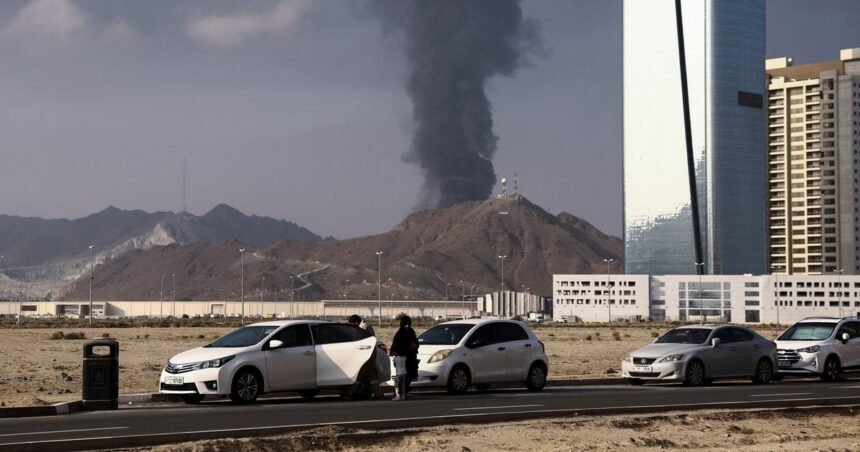
WASHINGTON D.C. — In a stark acknowledgment of an escalating international crisis, President Donald Trump has publicly defended the United States’ military posture and engagement in what he termed a ‘war with Iran,’ even as the conflict broadens across the volatile Middle East. The declaration comes amidst rising regional instability, with reports of attacks on several Gulf states and the grim announcement by the Pentagon identifying the first American service members killed in the intensifying hostilities. The White House has offered no immediate timeline for the cessation of military operations, leaving allies and adversaries alike grappling with profound uncertainty.
The unfolding events mark a critical turning point in the long-simmering tensions between Washington and Tehran, transforming a volatile standoff into an active and expanding military confrontation. The naming of fallen personnel underscores the human cost of this broadening engagement, amplifying calls for clarity and a defined strategy from the Trump administration as global powers watch the situation with deepening concern.
Context and Historical Precedent for Escalation
The current state of ‘war with Iran,’ as characterized by President Trump, did not materialize overnight but is the culmination of decades of strained relations, punctuated by periods of direct confrontation and proxy conflicts. Historically, the United States and Iran have been locked in a geopolitical struggle for influence in the Middle East, with Washington supporting regional allies like Saudi Arabia and Israel, and Tehran backing various non-state actors and regional proxies. Key flashpoints leading to the present crisis include the 2018 withdrawal of the U.S. from the Joint Comprehensive Plan of Action (JCPOA), often referred to as the Iran nuclear deal, and subsequent reimposition of crippling sanctions.
This policy shift under the Trump administration was designed to exert ‘maximum pressure’ on Iran, aimed at curbing its nuclear ambitions, ballistic missile program, and regional destabilizing activities. However, critics argued that this approach risked pushing Iran into a corner, potentially leading to the very escalation now witnessed. Incidents such as attacks on oil tankers in the Arabian Gulf, drone strikes on Saudi oil facilities, and retaliatory actions against U.S. personnel or interests in Iraq and Syria have incrementally heightened the military readiness of all parties involved. The recent ‘Day 4’ of this intensifying conflict, as noted by international observers, signifies a sustained period of direct military engagement, far surpassing previous tit-for-tat exchanges in scope and lethality.
The current situation draws parallels with previous periods of significant U.S. military involvement in the Middle East, such as the Gulf Wars, where initial limited engagements quickly escalated into broader regional conflicts with complex humanitarian and economic repercussions. The absence of a clear timeline for the current operations, coupled with President Trump’s defense of the ongoing military actions, signals a potentially prolonged and unpredictable period of engagement.
Analysis of the Widening Conflict and Initial Fatalities
The core of the unfolding crisis lies in the expanding geographical and operational scope of military actions. What began as targeted responses has evolved into a conflict impacting multiple points of interest across the Arabian Gulf. Reports indicate that several Gulf states, crucial for global energy supply and regional stability, have come under attack. While specific details on the nature and perpetrators of these attacks remain fluid, their occurrence signals a deliberate effort to broaden the theater of conflict, potentially aimed at destabilizing regional alliances or disrupting vital shipping lanes.
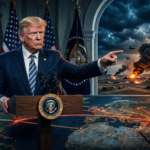
President Trump’s defense of the conflict, articulated from the Oval Office, emphasized national security interests and the protection of American assets and allies. However, the precise strategic objectives of this expanding military presence and the criteria for de-escalation remain largely unarticulated, fueling domestic and international debate. The President stated, ‘We are taking necessary action to protect American lives and interests, and we will not waver in our resolve against aggression.’ This assertion, while firm, has not been accompanied by a detailed roadmap for managing the conflict’s expansion or achieving a definitive resolution.
“The expansion of military action into key Gulf states represents a severe escalation. It transforms a proxy struggle into a direct confrontation with significant geopolitical and economic ramifications, far beyond the initial flashpoints.”
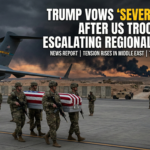
The most somber development is the official confirmation of American service members killed in action. The Pentagon’s release of their names marks a grave turning point, signifying the transition from a ‘tense standoff’ to a ‘hot war’ with irreversible human cost. This announcement invariably raises the stakes for the U.S. administration, intensifying public scrutiny and congressional oversight regarding the objectives, duration, and potential sacrifices associated with the ongoing military campaign. The sacrifice of these individuals underscores the profound realities of armed conflict and will undoubtedly shape public opinion and political discourse in Washington D.C. and beyond.
Key aspects of the current conflict analyzed include:
- Regional Spillover: Attacks extending beyond traditional conflict zones into critical Gulf nations, threatening shipping and energy infrastructure.
- U.S. Justification: President Trump’s defense centers on national security, protection of allies, and deterrence of Iranian aggression, though specifics on strategic end-goals are scarce.
- Human Cost: The naming of the first U.S. fatalities confirms the lethal nature of the engagement, shifting public perception and increasing pressure for strategic clarity.
- Absence of Timeline: The lack of a defined exit strategy or timeframe creates uncertainty, potentially emboldening adversaries and worrying allies about long-term commitment.
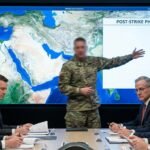
The U.S. military’s immediate focus appears to be on defending regional assets and personnel, while simultaneously assessing the broader threat landscape posed by Iran and its proxies. Intelligence agencies are likely working overtime to discern Iran’s full capabilities and intentions amidst this period of heightened aggression.
Perspectives and Implications on the Global Stage
The widening conflict carries profound implications for global stability, regional security, and the international economy. From a geopolitical perspective, the confrontation risks drawing in other major powers and regional actors, creating a complex web of alliances and antagonisms. Countries like China and Russia, with significant interests in the Middle East, have expressed concern, calling for de-escalation and diplomatic solutions, albeit with varying degrees of alignment with either the U.S. or Iran.
For key U.S. allies in the Middle East, particularly Saudi Arabia, the UAE, and Israel, the escalating conflict presents a dual challenge. While they may welcome a stronger U.S. stance against Iran, they also face immediate threats of retaliation and destabilization within their own borders. The attacks on Gulf states directly underscore this vulnerability, potentially forcing these nations to reassess their own defensive capabilities and diplomatic engagements. Israel, historically wary of Iran’s nuclear program and regional influence, views the situation with heightened vigilance, mindful of potential spillover effects on its own borders.
Economically, the impact is already being felt globally. The Arabian Gulf is a critical conduit for a significant portion of the world’s oil supply. Any disruption to shipping lanes or attacks on oil infrastructure lead to immediate spikes in global oil prices, impacting consumer markets and industrial output worldwide. Insurance premiums for shipping in the region have skyrocketed, deterring trade and increasing operational costs for international businesses. The global financial markets, already sensitive to geopolitical shocks, are reacting with volatility, reflecting investor uncertainty about the conflict’s trajectory and its broader economic ramifications.
Domestically in the United States, the conflict’s expansion and the first American casualties will undoubtedly intensify political divisions. Critics of the administration’s Middle East policy are likely to challenge the legal basis for military action, demand greater transparency, and push for congressional authorization. The upcoming election cycles could see this ‘war with Iran’ become a defining issue, shaping voter sentiment and influencing political discourse in Washington D.C. for years to come.
Prospective Conclusion: Navigating an Uncharted Course
As the ‘war with Iran’ deepens and its human cost becomes tragically apparent, the path forward remains fraught with uncertainty. The absence of a clear timeline from the Trump administration suggests either an open-ended commitment or a highly fluid strategy adapted to rapidly changing circumstances. Both scenarios present significant challenges for regional and global stability.
The international community stands at a crossroads, with calls for de-escalation echoing from various capitals. Diplomatic avenues, however constrained by current hostilities, must be explored to prevent further bloodshed and a broader regional conflagration. The imperative now is for all parties to exercise extreme restraint, uphold international law, and prioritize the protection of civilian lives and critical infrastructure.
Looking ahead, the critical questions revolve around the strategic objectives of the United States, the response capabilities and intentions of Iran, and the roles that major global powers will play in mediating or influencing the conflict. The naming of the first American casualties serves as a stark reminder of the gravity of the situation, urging a profound reflection on the consequences of military engagement and the enduring quest for peace in one of the world’s most volatile regions. The coming days and weeks will be pivotal in determining whether this conflict can be contained or if it will spiral into a crisis with devastating and long-lasting global repercussions.
Source of inspiration: Live Updates: Trump defends war with Iran as conflict widens, military names first service members who were killed – CBS News — cbsnews.com