

Introduction to the US-Iran Conflict
The relationship between the United States and Iran is marked by a series of complex historical events that have shaped the current geopolitical landscape. One pivotal moment in this relationship occurred in 1953 when the CIA orchestrated a coup to overthrow Iran’s democratically elected Prime Minister, Mohammad Mossadegh. This intervention was motivated by the desire to secure Western control over Iranian oil resources and curb the threat of communism in the region. The coup led to the reinstatement of the Shah, Mohammad Reza Pahlavi, whose regime was characterized by authoritarianism and widespread repression. This incident planted the seeds of distrust and resentment among the Iranian populace towards the United States, which they perceived as an external power meddling in their sovereignty.
- Introduction to the US-Iran Conflict
- Recent Escalations: Timeline of Events
- Key Players Involved in the Conflict
- Military Strategies and Operations
- Impact on Global Politics and Economy
- Media Coverage and Public Perception
- Humanitarian Concerns and Civilian Impact
- Potential Resolutions and Future Outlook
- Conclusion: What Lies Ahead
Fast forward to 1979, the Iranian Revolution marked another significant turning point. The revolution led to the overthrow of the Shah and the establishment of the Islamic Republic under Ayatollah Khomeini. Fearing the spread of anti-Western sentiment and the potential for Islamic extremism, the United States found itself at odds with the new regime. The hostage crisis of 1979, in which Iranian militants seized the US embassy in Tehran and held diplomats hostage for 444 days, further solidified the animosity between the two nations. The fallout from these events has had lasting implications for US-Iran diplomatic relations, leading to economic sanctions, military confrontations, and a persistent cycle of hostility.
Furthermore, subsequent events such as Iran’s support for militant groups in the region and its nuclear ambitions have exacerbated tensions. The United States has enacted various strategies, including withdrawal from the Joint Comprehensive Plan of Action in 2018 and renewed sanctions, as responses to what they perceive as Iranian aggression. As a result, the US-Iran conflict remains a critical issue in international relations, with a multitude of consequences for regional stability and global security.
Recent Escalations: Timeline of Events
The US-Iran conflict has escalated significantly over the past few years, with multiple incidents marking the timeline of these increasing hostilities. One critical event occurred in May 2018, when the United States announced its unilateral withdrawal from the Joint Comprehensive Plan of Action (JCPOA), which was an agreement aimed at limiting Iran’s nuclear program. This withdrawal led to a series of sanctions re-imposed on Iran, drastically affecting its economy and triggering a retaliatory response from Iranian officials.
By the end of 2019, tensions reached a significant peak following the assassination of Iranian General Qassem Soleimani in a US drone strike in Baghdad. This incident prompted Iran to retaliate with missile strikes on January 8, 2020, targeting US military bases in Iraq. Although there were no American casualties, this attack underscored the potential for further escalation.
In the following months, Iran openly resumed enriching uranium beyond the limits set by the JCPOA, indicating its intent to progress its nuclear program despite international scrutiny. The subsequent year saw the US intensifying its sanctions, further straining relations. Notably, in 2021, several maritime confrontations occurred, including the seizure of vessels in the Persian Gulf, showcasing the rising military tensions.
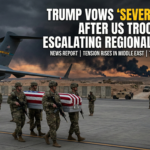
Most recently, in 2023, drone strikes attributed to Iran-backed groups targeted US forces in the region, resulting in injuries and prompting retaliatory strikes by the US. Each of these critical incidents serves as a reminder of how historical grievances, national security concerns, and regional ambitions have combined to create a precarious situation characterized by mutual distrust and aggression. The timeline reflects an ongoing cycle of action and reaction that has defined US-Iran relations, illustrating the complex interdependencies and repercussions in the geopolitical landscape.
Key Players Involved in the Conflict
The US-Iran conflict features a complex array of key players, each with distinct interests and objectives that contribute to the ongoing crisis. At the forefront, the United States government represents a significant player, driven by its desire to curb Iran’s influence in the Middle East, containing its nuclear ambitions, and ensuring regional allies’ security, particularly Israel and Saudi Arabia. The US often adopts a stance of economic sanctions and military readiness, which it believes are essential in deterring Iranian aggression.
On the opposing side, the Iranian leadership, characterized by a mix of hardline ideologies and pragmatic elements, seeks to assert its sovereignty and enhance its regional influence. The current government, led by President Ebrahim Raisi, views the United States as a historical adversary, which shapes its policies aimed at resisting foreign interference. Iran’s commitment to supporting proxy groups in Iraq, Lebanon, Syria, and Yemen is indicative of its strategy to project power across the region, drawing ire from the US and its allies.
Regional allies play a crucial role in shaping the dynamics of the US-Iran conflict. Countries such as Saudi Arabia and Israel actively lobby for stringent measures against Iran, viewing its actions as a direct threat to their stability and security. Their concern over Iran’s nuclear development, coupled with its support for militant groups, adds layers to the conflict, often pressuring the US for military support and intervention.
Lastly, international actors, including the European Union and Russia, have vested interests in the conflict’s resolution. The EU has sought to maintain the Joint Comprehensive Plan of Action (JCPOA) while managing economic relations with Iran, while Russia aims to consolidate its influence in the region, balancing its relationships with both Iran and the West. These players significantly shape the pathways to either escalation or de-escalation in the ongoing crisis.
Military Strategies and Operations
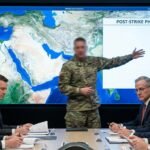
The military strategies adopted by both the United States and Iran are reflective of their unique geopolitical goals, historical experiences, and available military resources. The US has historically focused on a technology-driven approach to warfare, leveraging its superior technological capabilities, extensive intelligence networks, and highly mobile forces. Key components of US military strategy include the deployment of advanced weaponry, unmanned aerial vehicles (drones), and cyber warfare capabilities. Recently, the US has also emphasized rapid response forces to deter potential Iranian aggression in the region.
On the other hand, Iran’s military strategy is characterized by asymmetrical warfare tactics. Iran has invested in developing a network of proxy groups throughout the Middle East, which serve as a force multiplier against conventional military threats. These proxies are often equipped with sophisticated weaponry and can launch operations at a moment’s notice. Iran’s military doctrine heavily focuses on guerrilla warfare, leveraging local knowledge and unconventional tactics to counterbalance the US’s technological edge.
Troop deployments also illustrate the differing military strategies of both nations. The United States maintains numerous military bases across the globe, especially in the Middle East, which allows for rapid troop movements and a strong presence in critical regions. In contrast, Iran has developed a robust defensive posture, reinforcing its borders and utilizing its geographical terrain to its advantage. Military exercises conducted by both nations serve to demonstrate readiness and adaptability to potential threats. The US often conducts large-scale joint exercises with allies, while Iran focuses on showcasing its missile capabilities and naval strength to assert its deterrence posture.
Furthermore, advancements in technology and intelligence play a crucial role in shaping the military strategies of both countries. The US exploits satellite surveillance and cyber intelligence to gather critical information, enhancing its strategic planning. Meanwhile, Iran emphasizes the development of indigenous weapons and cyber capabilities, aiming to achieve self-sufficiency in defense and maintain an edge over adversaries. Understanding these military strategies provides valuable insight into the preparedness of both countries as tensions continue to escalate in this complex geopolitical landscape.
Impact on Global Politics and Economy
The ongoing tensions between the United States and Iran have far-reaching implications on global politics and economic stability. As the two nations navigate this complex relationship, the ripple effects are felt across diplomatic channels, particularly in the Middle East. The strategic positions of both countries cultivate a myriad of alliances and confrontations, ultimately reshaping international relations. The polarization engendered by this crisis has further complicated existing geopolitical landscapes, influencing the decisions of other nations regarding their foreign policies and alliances.
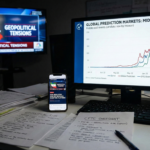
Additionally, the conflict has significant repercussions on global oil prices. Iran’s involvement in oil production and exportation has become a focal point for global energy markets. Any escalation in confrontations may lead to disruptions in oil supply, resulting in volatile price fluctuations that reverberate through economies worldwide. As oil is a primary commodity influencing economic activities, any adverse developments in the US-Iran conflict can lead to increased production costs for a multitude of industries, directly impacting consumers and businesses alike.
Moreover, economic instability is a central theme manifesting from the ongoing crisis. Countries closely linked to Iran or those reliant on its oil exports face the potential for economic downturns. Likewise, nations allied with the US may experience economic pressures as they navigate the complex web of sanctions imposed against Iran. This multifaceted economic landscape amplifies the challenges nations encounter while attempting to stabilize their economies amidst rising tension. Ultimately, the US-Iran war underscores the intricate relationship between international conflict and economic conditions globally, highlighting the crucial interdependencies that exist between nations.
Media Coverage and Public Perception
The media landscape plays a pivotal role in shaping public perceptions regarding the US-Iran war. Traditional news outlets, including newspapers, television, and radio, have provided extensive coverage of the events, often highlighting political rhetoric and military developments. The framing of news stories significantly influences public understanding and sentiment towards the conflict. For instance, narratives that emphasize national security threats may instill fear, while those focusing on diplomatic efforts can promote hope for resolution.
Simultaneously, social media platforms have emerged as crucial arenas for discussion and dissemination of information concerning the US-Iran conflict. Individuals turn to these platforms to share opinions, news articles, and personal perspectives, often leading to a rapid spread of information. However, this democratization of information also raises concerns regarding the proliferation of misinformation and propaganda. False narratives can quickly gain traction, complicating public perception of the war. In particular, the echo chamber effect of social media can reinforce existing beliefs and biases while sensationalizing certain aspects of the conflict.
In this complex media environment, critical media literacy becomes essential for the public. Individuals must possess the ability to discern credible sources from unreliable ones, especially during heightened tensions. The possibility of misinformation can lead to a misinformed public, hindering meaningful discourse around the implications of the war. Both traditional and new media are tasked with a significant responsibility; not only must they report accurately, but they must also combat misinformation to foster a well-informed society.
Humanitarian Concerns and Civilian Impact
The ongoing conflict between the United States and Iran raises significant humanitarian concerns that extend far beyond the immediate battlefield. The repercussions of military actions adversely affect the Iranian civilian population, many of whom find themselves in precarious situations due to the sustained hostilities. Civilians often bear the brunt of war, facing threats to their safety, displacement from their homes, and disruptions to essential services such as healthcare, food supply, and education.
A substantial number of Iranians have been displaced as a result of the conflict, leading to a notable refugee crisis. Those forced to leave their homes seek asylum in neighboring countries or further afield, often facing perilous journeys and uncertain futures. Refugees are typically vulnerable and require urgent assistance in terms of shelter, medical care, and basic necessities. The strain on host countries can exacerbate existing tensions and complicate international relations, as resources become stretched thin.
In this crisis, international humanitarian organizations play a pivotal role in addressing the needs of affected civilians. These organizations face multiple challenges, including limited access to conflict zones, bureaucratic hurdles, and, at times, hostility. Their responses vary, but they commonly provide essential services such as food distribution, medical aid, and psychological support targeted at both refugees and those remaining in conflict areas. An ethical consideration arises around military actions that disrupt these humanitarian efforts, further endangering the survival of civilians.
As the situation evolves, the delicate balance between necessary military action and the imperative to protect civilians remains a central theme in discussions around the conflict. The potential for long-term societal damage on civilian populations underscores the urgent need for a diplomatic resolution that prioritizes humanitarian safety.
Potential Resolutions and Future Outlook
The ongoing conflict between the United States and Iran has raised significant concerns across international borders, prompting discussions around potential resolutions and pathways to de-escalation. Central to these discussions is the importance of diplomatic efforts, negotiations, and comprehensive peace proposals aimed at addressing the myriad issues fueling the hostility.
One of the principal avenues for resolution involves renewed diplomatic negotiations, particularly focusing on the contentious nuclear deal, formally known as the Joint Comprehensive Plan of Action (JCPOA). Reviving this agreement could foster a more stable environment, reducing tensions that have escalated in recent years. Key stakeholders, including the European Union, may play a crucial mediating role to help bring both parties back to the negotiation table, emphasizing the significance of mutual concessions.
Additionally, addressing regional dynamics will be essential for achieving a long-lasting solution. This includes engaging with other Middle Eastern nations and non-state actors influenced by the US-Iran conflict. Strategic dialogues focused on regional security can diminish the negative repercussions of external influence and build a cooperative framework that encompasses multiple interests.
However, challenges remain formidable. Distrust permeates interactions, as both sides harbor suspicions regarding each other’s intentions and capabilities. This mutual distrust can hinder progress in negotiations. Furthermore, domestic pressures within both countries complicate the political landscape, as leaders may grapple with opposition to concessions that could be perceived as weaknesses. Therefore, overcoming internal dissent is as crucial as managing bilateral relations.
In conclusion, while pathways to de-escalation exist through diplomatic channels and coordinated efforts, the road towards a sustainable resolution requires not only commitment from both the United States and Iran but also a willingness to navigate the intricate web of regional politics that underlies their contentious relationship. The ongoing pursuit of peace remains vital in averting future conflicts and fostering stability in the region.
Conclusion: What Lies Ahead
The ongoing US-Iran conflict is characterized by a multitude of factors that contribute to its complexity. As we have explored throughout this blog post, the historical backdrop, geopolitical interests, and evolving diplomatic relationships illustrate that the situation is neither simple nor straightforward. The potential for military confrontation raises significant concerns, as both nations hold regional ambitions that can trigger further tensions.
Key to understanding the future trajectory of this crisis is recognizing that both the United States and Iran possess significant motivations for maintaining their respective positions. The US aims to curb Iranian influence in the Middle East, whereas Iran is focused on safeguarding its sovereignty and regional power. This standoff is fraught with uncertainty, as recent events demonstrate the fragile nature of diplomatic engagements, which can dissolve swiftly into hostilities.
Additionally, the role of international actors, including allies and adversaries alike, cannot be understated. Their involvement has the potential to either mitigate or exacerbate the tensions further. The dynamics of the crisis are subject to change, influenced by domestic policy shifts, economic conditions, and international relations.
As the future unfolds, staying informed about upcoming developments is crucial. The intricate web of alliances and enmities, coupled with ongoing negotiations, necessitates close attention to emerging stories. The path forward remains unpredictable, encapsulating a wide range of possibilities that can either lead to resolution or escalation. Engaging with credible news sources and expert analyses will be essential for those wanting to grasp the implications of this conflict in the broader context of global security.